


.avif)





Your furnace has been sitting idle since spring. On some October evening, the Bay Area drops into the 40s, you push the thermostat up for the first time in months, and the system pulls air through whatever furnace filter was left in the slot back in May. That first heat cycle is when a neglected filter does the most damage: months of collected dust, pollen, pet hair, and summer wildfire smoke particles sitting directly in front of your blower.
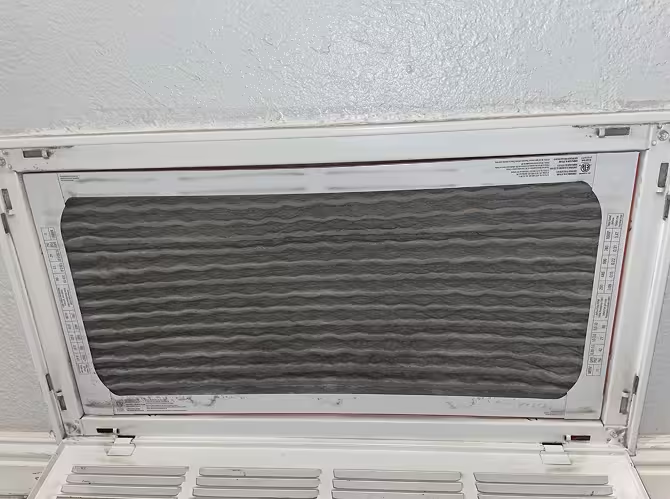
Swapping it takes about three minutes and costs somewhere between $8 and $60. Our technicians see the alternative constantly. When a customer calls with no heat or no cool, an extremely dirty air filter is one of the first things we find, and it is one of the most preventable service calls there is.
What a Furnace Filter Actually Does
Most homeowners assume the filter is there to clean the air they breathe. That is half of it, and it is the cheaper half.
The filter does catch dust, pollen, pet dander, mold spores, and combustion particles before they recirculate through your ductwork. In a tightly sealed modern home, the same air passes it dozens of times a day. But its second job is protecting the equipment, and that is where the money is. Everything that gets past the filter lands on the blower wheel, in the heat exchanger, or on the evaporator coil sitting right above your furnace. A dirty blower wheel loses airflow capacity, a dirty coil loses heat transfer, and when a clogged filter starves the system of return air, the heat exchanger runs hotter than designed. The high-limit switch cuts the burners to protect the furnace, and it starts cycling on and off without ever reaching your setpoint.
Where Your Filter Is and What Size You Need
Before anything else, find it. In our service area, it comes down to the age of the system.
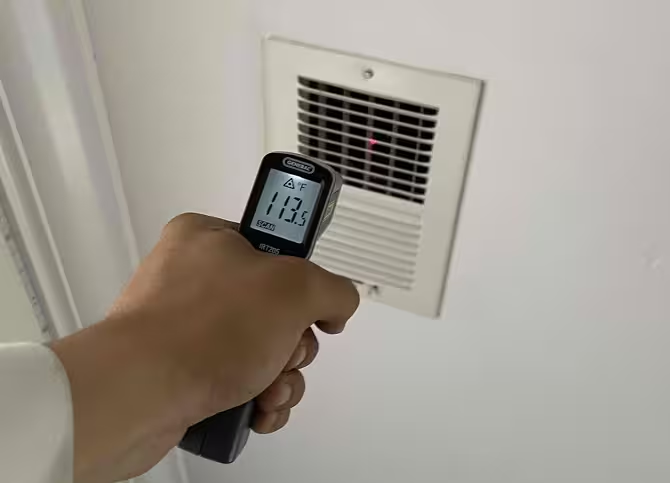
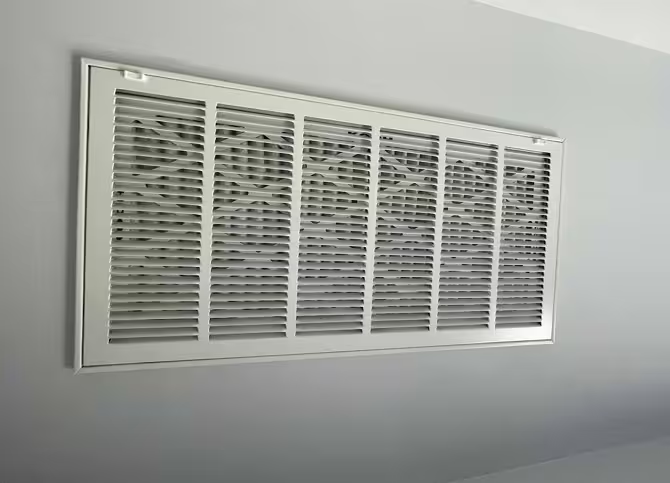
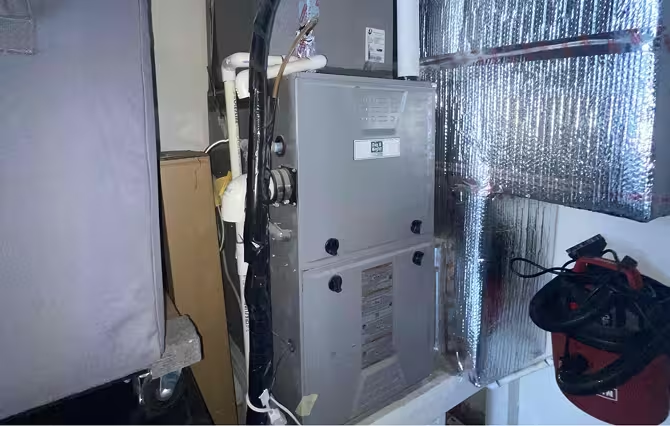
If your HVAC system is relatively new, under roughly ten years old, you most likely have a dedicated filter cabinet on the return side, separate from the furnace itself. That is where we install filters when we do the work, and 20x25x4 is the size we see most often. On older systems, the filter usually lives inside the furnace, in a slot on the return side of the cabinet, and there, 16x25x1 is by far the most common size we pull out of San Jose homes. A third possibility is that your home filters at the return grille instead, so the filter sits behind a large vent on a wall, ceiling, or floor. If you cannot find one at the equipment, check every oversized grille in the house, and know that a few homes have filters in more than one place.
Whatever you find, the size is printed on the cardboard frame as length by width by thickness. Buy that exact size and do not round. A filter half an inch too small lets unfiltered air run straight around the edges, which defeats the entire point of having one.
Why Fall Is the Swap Point in the Bay Area
The standard advice online is written for Minnesota, and our climate works against your filter in a way that advice does not account for. Because the furnace here may only run a handful of weeks a year, a homeowner who changes the filter at the start of heating season and again at the start of cooling season is quietly running six-month intervals on a filter rated for ninety days.
Worse, in a standard forced-air home, the same filter serves your air conditioner. It worked all summer, through July and August, when the system ran hardest. October's filter is not fresh; it is a filter that just finished its heaviest season. And fall is the smoke season in Northern California, not spring. Wildfire smoke is fine particulate that slips through a cheap fiberglass panel and loads a good pleatedwq\=aq0 filter far faster than the label suggests, so a filter rated for ninety days can be spent in three weeks during a smoke event. On top of all that, the dust that settled on your heat exchanger and burners all summer burns off on the first heat cycle. That faint scorched smell every October is normal, and a clean filter with a clear airflow path gets it over within minutes.
How Often to Change a Furnace Filter
There is no single number, because the answer depends on thickness, MERV rating, and what is in your air. Use this as a starting schedule and adjust based on what the filter looks like when you pull it.
Shorten those intervals if you have pets, since one shedding dog or cat cuts the useful life by roughly a third, and two or more means checking monthly regardless of rating. Do the same if anyone in the house has allergies or asthma, if there is a smoke advisory or construction nearby, if your home is large enough that more air volume crosses the same filter, or if you run the blower in "on" rather than "auto," which roughly triples the air passing through it. Remodeling is the extreme case: drywall dust will destroy a filter in days, so change it when the work finishes and again a month later.
The habit that actually works is simpler than any schedule. Look at the filter once a month and replace it when you can no longer see the media through the dirt, or when light no longer passes through it held up to a window. The calendar is a reminder. The filter itself is the instruction.
You will also get warnings from the system. Weak airflow from the registers farthest from the furnace, longer cycles or short cycling without hitting the setpoint, dust settling faster than usual, allergy symptoms that worsen when the system runs, a heating bill that climbed without a change in the weather, or a whistling sound at the return grille all point to a restriction, and the filter is the first place to look.
Which Way Does the Air Filter Go in a Furnace? Follow the Arrow
This is the most common mistake in a DIY filter swap, and nobody notices it, because a backwards filter does not trigger an error code. It just quietly costs you airflow.
The rule is that the arrow printed on the filter frame points toward the furnace, air handler, or blower motor, never back toward the room or the return duct. The arrow shows the direction air travels, and air always moves the same path: from the rooms into the return grille, through the return duct, through the filter, into the blower, through the furnace, out the supply ducts, and back into the rooms. Since the filter always sits between the return air and the blower, the arrow always aims at the blower. Only the physical direction it ends up pointing changes with your equipment.
In an upflow furnace, the kind in a garage or basement where air enters low and exits up, the arrow points up toward the top of the cabinet. In a downflow furnace, common in attic installs, it points down. In a horizontal furnace lying on its side in a crawlspace or attic, it points sideways toward the blower end of the unit. And if your filter sits in a wall or ceiling return grille, the arrow points into the wall or ceiling, away from the room, with the pleated face you can see staying toward you.
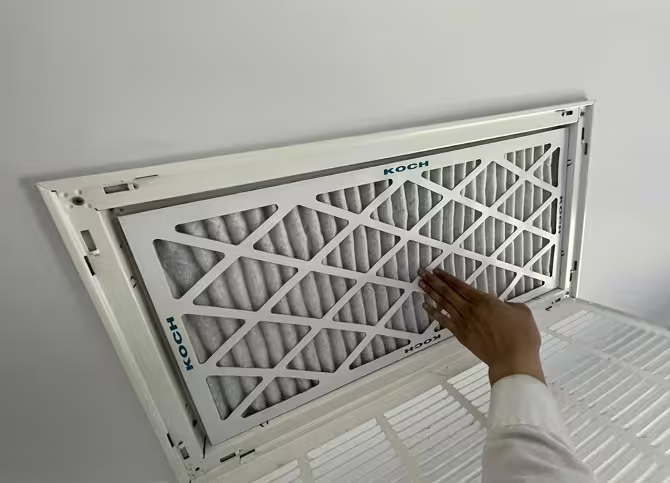
Some basic panels have no arrow at all. In that case, the open, loosely pleated face goes toward the incoming return air, and the stiffer side with the wire mesh or cardboard cross-bracing faces the blower. That backing exists to keep the media from bowing under suction, so it belongs downstream. If you are not sure which way your air moves, hold a sheet of paper near the grille with the system running. If it sticks, that is a return.
Installing it backwards will not break anything the same week, which is exactly why it goes unnoticed. What it does is present the dense downstream layer to incoming dust so the filter clogs sooner than its rating, let the media bow toward the blower and open gaps at the frame, pass more dust into the equipment while restricting more airflow, and make the blower draw more power for less delivered air. It simply makes the system work harder every cycle for months. If you find yours reversed, flip it and move on.
The Fall Filter Swap, Step by Step
- Turn the system off. Set the thermostat to "off," and if you are comfortable doing so, kill power at the furnace service switch so the blower cannot pull loose debris into the cabinet while the slot is open.
- Find the filter and photograph it before you pull it. One photo captures both the size and the arrow orientation, which saves the guesswork next time.
- Slide the old one out flat and bag it immediately so you do not shake the dust back into the room. It goes in the regular trash.
- Look at the dirt pattern. Even gray means normal loading. Heavy dirt on one side, or clean streaks along an edge, means air is bypassing the filter, and the frame or slot needs attention.
- Insert the new filter with the arrow pointing toward the blower, snug in the track, with no forcing and no gaps at the sides.
- Restore power, run a full cycle, and write the install date on the frame in marker. It is the lowest-tech and most reliable reminder there is.
Choosing the Right Filter: MERV Without the Guesswork
MERV rates how well a filter captures particles, and higher is not automatically better, because higher MERV also means more resistance to airflow.
Basic fiberglass sits at MERV 1 to 4 and protects the equipment from large debris while doing very little for your lungs, which makes it acceptable only if you change it monthly and nobody in the house has respiratory issues. MERV 8 is a solid baseline for dust, pollen, and pet dander in a typical home, and MERV 11 is the better balance if you have pets or mild allergies. MERV 13 captures fine particulate, including a meaningful share of wildfire smoke, which is the level California's energy code specifies for new residential systems and the right target for Bay Area homes. Above that, MERV 14 to 16 and HEPA are specialty territories that require a bypass or dedicated setup rather than a panel dropped into a standard slot.
There is one condition on MERV 13 worth understanding. A one-inch slot has very little media surface area, so a high-MERV one-inch filter can restrict airflow enough to hurt performance and, on some systems, cause the furnace to overheat and short-cycle. The correct way to get MERV 13 filtration is more filter area, not just a higher number, which usually means a four-inch or five-inch media cabinet. If your system is newer and already takes 20x25x4, you are well positioned for this. A technician can measure static pressure across your system and tell you what it will actually tolerate.
Mistakes We See on Service Calls
First, the wrong size — it tops the list. Air takes the path of least resistance, and that path is the gap around an undersized filter.
Second, stacking two filters in one slot to "filter better," which just halves your airflow.
Third, dropping a high-MERV one-inch filter into a system that can't breathe through it — that produces symptoms that look exactly like a failing furnace.
Fourth, washing a disposable pleated filter, which ruins it: water collapses the media and destroys the electrostatic charge. Only filters explicitly labeled washable get rinsed, and only when fully dry before you reinstall them.
Then two subtler ones. Fifth, if the return grille itself is caked with dust, you're restricting air before it ever reaches the filter — so clean the grille too. And sixth, if a fresh filter doesn't restore weak airflow, the restriction is somewhere else: a dirty blower wheel, a crushed flex duct, a closed damper, or a dirty evaporator coil.
The Other Thing That Causes Emergency Calls
The dirty filter has a twin. Alongside clogged filters, a clogged condensate drain line is one of the most common causes of the no-cool calls we run. Your furnace and air conditioner share the same cabinet space, and the evaporator coil above your furnace drains condensate through a line that fills with algae and sludge over time. When it backs up, a safety switch shuts the system down, or water overflows into the equipment.
You cannot see it from the filter slot, and there is no homeowner version of that check. It is one reason a filter swap, valuable as it is, is not the same thing as maintenance. A proper tune-up covers combustion analysis and a CO test, heat exchanger inspection, burner cleaning, blower and coil inspection, condensate drain clearing, and airflow and static pressure readings, none of which a filter can tell you about. It is worth booking one before the first real cold snap if your furnace has not been serviced in over a year, if you are getting short cycling or a burning smell that persists past the first few cycles, or if you want static pressure measured before upgrading to a higher-MERV filter.
A one-time maintenance visit is $129. If you would rather not track any of this yourself, the IRBIS Home Care Plan is $24.95 a month and includes two maintenance visits a year, free HVAC and plumbing diagnostics, and 20% off labor on service repairs.
Final Thoughts
A seasonal furnace maintenance visit is one of the most practical things a homeowner can do before winter, and when the filter, airflow, and safety controls are all right, the system runs quietly in the background for years without a second thought. The key is catching a restriction while it is still a $15 filter rather than a December emergency.
If you would like help choosing the right filter for your system, checking whether it can handle MERV 13, or scheduling a furnace tune-up, call IRBIS at +1 (669) 312-3643 or contact us online to schedule a consultation.
During a repair visit, our technicians will inspect your A/C system, diagnose the problem, and provide you with repair options. Once you choose an option, we'll proceed with the necessary repairs. Afterward, we'll test the system to ensure it's working correctly and provide you with a detailed report.