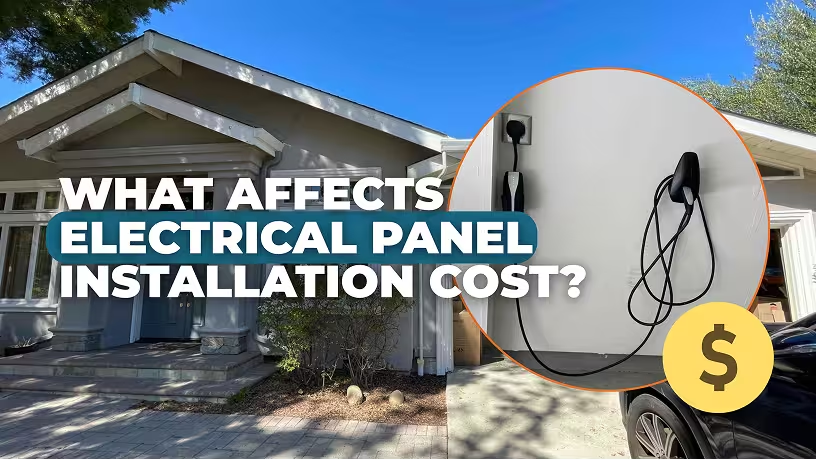
For EV charger installation San Jose homeowners can trust, choose IRBIS, a C-10 licensed contractor that manages permits from application through inspection. We install Level 2 home charging for every major EV brand, with same-day estimates and a panel assessment included.
Note: The estimate provided is preliminary. A licensed technician will perform measurements to finalize your installation quote.
.avif)
Not Cooling?
Not Heating?
Leaking?
Not Turning Off?
Note: The estimate provided is preliminary. A licensed technician will perform measurements to finalize your installation quote.
.avif)


Our EV Level 2 charger installation service gives San Jose homeowners a practical way to recharge overnight.


IRBIS runs the full job to install Rheem water heater systems correctly, not just a drop-in swap of the old tank.
Tesla
Tesla Wall Connector installation, including Universal Wall Connector models.
Ford
Home charging for the F-150 Lightning and Mustang Mach-E.
Rivian
Level 2 charging for the R1T and R1S.
GM
Chevrolet, GMC, and Cadillac electric models and charger hardware.
European Brands
BMW, Mercedes-Benz, Audi, and Volkswagen electric vehicle models.
Hyundai Motor Group
Hyundai IONIQ, Kia EV6, and Genesis GV60 charging.
J1772
J1772-compatible vehicles, approved adapters, and current connector types.
%201.avif)


San Jose drivers have taken to electric cars in large numbers, and the same is true across Santa Clara County and the Bay Area. The California 2035 zero-emission rule for new passenger vehicles, but federal action and ongoing court cases have put its future in doubt. A regular 120-volt outlet charges slowly, adding only 3–5 miles of range per hour. Programs like SVCE (Silicon Valley Clean Energy) also offer rebates for EV charger pre-wiring in Santa Clara County. A Level 2 unit adds about 20–30 miles. PG&E’s EV plans may also make overnight charging cheaper.


Most 40-amp Level 2 chargers are connected to their own 50A, 240V circuit. San Jose homes built after 1990 typically have a 200-amp panel with enough room, while homes built before 1980 with a 100-amp panel are more likely to need an upgrade. The panel's age is only part of the picture — IRBIS checks the actual household load and spare capacity before recommending any upgrade.


Step 1
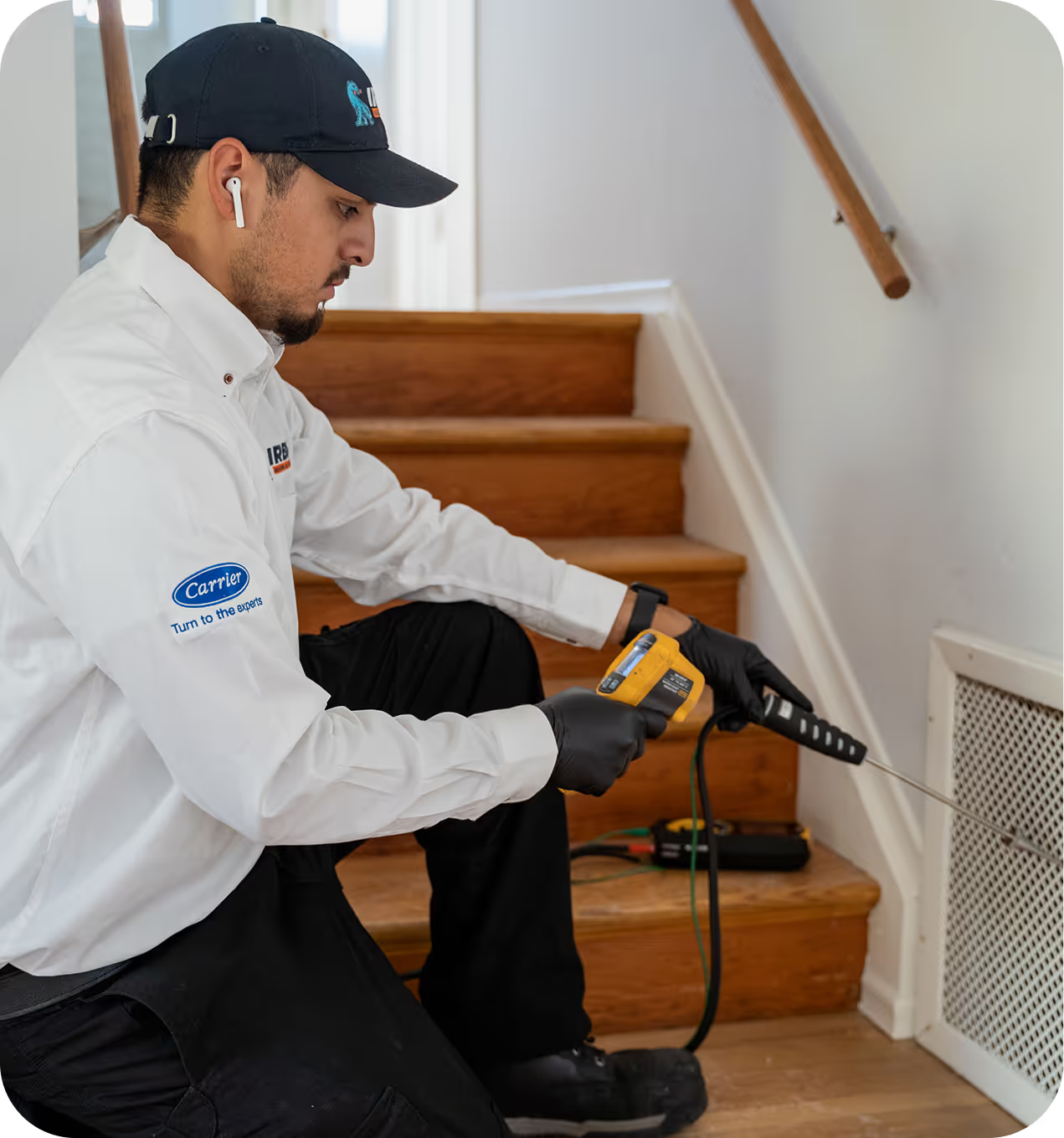
A certified EV charger installer checks the panel, reviews household power use, and decides where the new cable should run.
Step 2
IRBIS takes care of the permit paperwork and city fees, follows the application through approval, then books the inspection.
Step 3
Our electrician installs the dedicated circuit, breaker, conduit, wiring, mounting hardware, and selected hardwired or plug-in charger.
Step 4
Before leaving, the electrician checks that the charger works, connects the app, labels the circuit and hands over the paperwork.

Alert
IRBIS focuses on helping customers choose the right system for their budget and needs. Recommendations take into account the vehicle, the home’s electrical capacity and the customer’s usual charging routine.
Licensed C-10 Contractor
IRBIS holds California CSLB license #1048009 with a C-10 electrical classification.
Permit Management Included
Our permits team handles the application, city communication, inspection scheduling, and closeout records.
Panel and Charger Coordination
The same crew handles the electrical check, circuit and charger. If the panel also needs work, IRBIS can take care of that too.
All EV Brands Supported
We install owner-supplied or selected equipment for Tesla, Rivian, Ford, GM, BMW, Hyundai, Kia, and other major brands.


Financing spreads a new system into monthly payments, so an upgrade fits your budget without a large upfront hit.
.svg.webp)
0% APR for 60 Months
Available Till Nov 20, 2026


IRBIS works on home EV projects in San Jose and elsewhere in the Bay Area, including Santa Clara, San Mateo, and Alameda counties.


Questions & Answers
Several things can change the price, especially the distance from the panel and whether digging is involved. IRBIS checks the job first and gives you the cost in writing.
Yes. San Jose requires an electrical permit for Level 2 charging, and some equipment may also require a mechanical permit. IRBIS manages both.
Not always. A load calculation determines whether the existing service can carry the charger. Load management or a lower charging rate may avoid an upgrade.
Most straightforward home installations take a few hours to one day. Panel work, trenching, permit review, or inspection timing can extend the schedule.
Yes. IRBIS installs Tesla Wall Connectors and can confirm connector choice, circuit size, placement, Wi-Fi setup, and compatibility with your Tesla model.
Level 1 uses 120 volts and adds about 3–5 miles of range per hour. Level 2 uses 240 volts and adds roughly 20–30 miles of range per hour.
Yes. An outdoor charger can go on a wall or pedestal. We use weather-rated equipment and position the wiring where it will not be easily damaged.

Connect with Our Support Team – We're Always Happy to Help!

August 31, 2026
If you've searched "electrify my home" and come away with more questions than answers, you're not alone. Whole-home electrification is one of the biggest shifts happening in residential HVAC and plumbing right now, and it's also one of the most misunderstood.

June 12, 2026
If you've asked a few electricians about electrical panel installation and gotten very different quotes, you're not alone. Panel work varies more than most homeowners expect — because the final cost depends on what your home actually needs, not just the panel itself. Understanding the key factors behind the price helps you evaluate quotes accurately and make a confident decision.
View All