


.avif)





If you've searched "electrify my home" and come away with more questions than answers, you're not alone. Whole-home electrification is one of the biggest shifts happening in residential HVAC and plumbing right now, and it's also one of the most misunderstood. Homeowners hear the term thrown around alongside heat pumps, induction cooktops, and electric panels, but rarely get a clear, complete picture of what home electrification actually involves, what it costs, how long it takes, and what can go wrong along the way in older homes. This guide walks through all of it: what electrification means, the real challenges our technicians run into on actual jobs, what a full conversion typically costs and how long it takes, and where the rebate landscape stands right now.
What Is Home Electrification?
At its core, home electrification means replacing gas-powered systems and appliances with electric equivalents, typically a heat pump for heating and cooling, a heat pump water heater in place of a gas unit, and often an induction cooktop instead of a gas range. The goal is a home that no longer depends on a gas line at all, running entirely on electricity. For many homeowners, this shift is driven by a mix of factors: lower long-term operating costs in some markets, better indoor air quality without gas combustion byproducts, improved resilience when paired with solar and battery storage, and a desire to move away from fossil fuels at the household level. It's rarely a single appliance swap. A true whole-home electrification project usually touches heating and cooling, water heating, and sometimes cooking and clothes drying all at once, which is why planning and sequencing the work correctly matters so much.
Common Challenges When Electrifying Older Homes
Older homes were simply not designed with electrification in mind, and that shows up in a handful of predictable ways on almost every project.
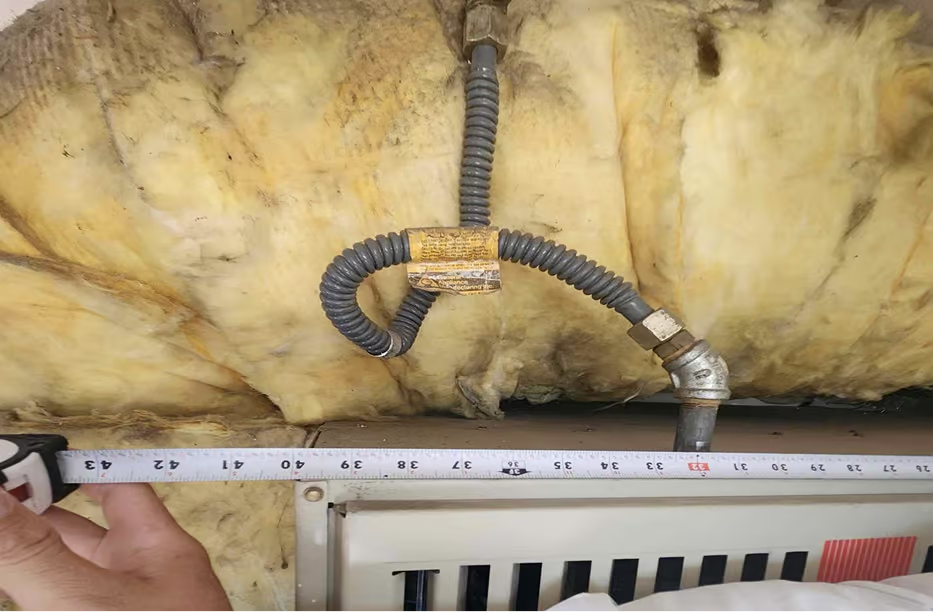
Ductwork limitations. Many older homes have ductwork sized and routed around the airflow requirements of an older gas furnace, not a modern heat pump system. Getting proper performance and efficiency out of a heat pump often means modifying or fully replacing sections of that ductwork rather than simply swapping the equipment at the ends of it.
Asbestos. Homes built before the 1980s frequently have asbestos present around older HVAC components, and that material typically needs to be professionally abated before any HVAC work can begin. It's an extra step, but it's a non-negotiable one for safety.
Space constraints for heat pump water heaters. Heat pump water heaters are physically larger than the small gas units they often replace, and many existing water heater closets simply weren't built with that footprint in mind. Depending on the home, this can mean relocating the unit, installing it in an exterior cabinet, or modifying the existing space to fit.
Electrical capacity. This is the concern homeowners bring up first, but it's not always the obstacle people expect. With a proper load calculation, load management systems, and 120-volt heat pump water heaters where appropriate, many homes can be fully electrified while keeping their existing electrical service exactly as it is.
Every electrification project should start with a Manual J load calculation, which properly sizes the HVAC equipment for the home and evaluates its electrical requirements before any equipment is chosen.
Does Your Electrical Panel Need to Be Upgraded?
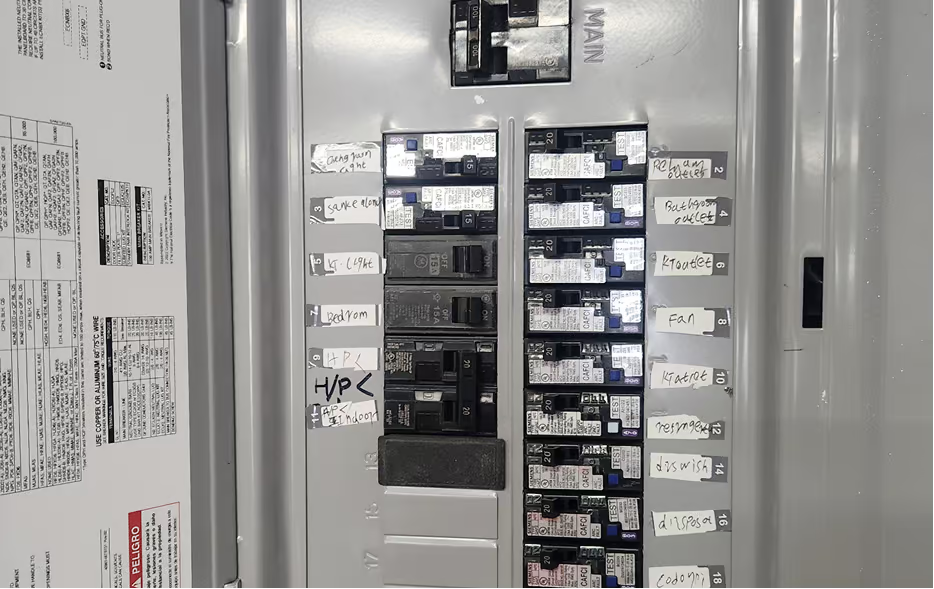
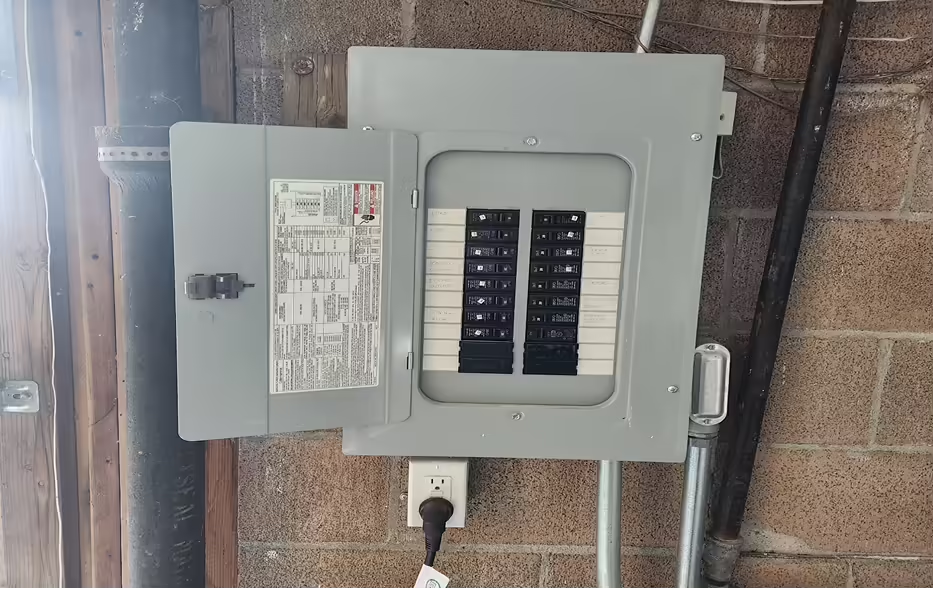
This is one of the first questions almost every homeowner asks, and the honest answer is: it depends, but probably not as often as you'd think. Based on completed projects, roughly 30% to 40% of homes require an electrical panel upgrade to fully electrify. The remaining projects can typically be completed without one, using load management systems or selecting equipment like 120-volt heat pump water heaters to stay within the home's existing electrical capacity.
Most homes fall into either 100-amp or 200-amp electrical service, and the goal on every project is to design around that existing infrastructure whenever it's safely possible, rather than defaulting to a panel upgrade. Avoiding an upgrade isn't just about saving money on the panel itself. Projects that require utility involvement, such as coordination with PG&E, can face significant delays, and PG&E's engineering requirements can add roughly $1,500 to $2,500 in additional fees depending on whether the service is overhead or underground.
For homes with underground electrical service specifically, solutions like load management systems or smart electrical panels can often help avoid a full service upgrade altogether. A SPAN smart panel installation typically runs around $8,900 when that approach makes sense for the home.
What a Full Electrification Project Costs and How Long It Takes
For a typical 1,500 to 1,800 square foot home, whole-home electrification projects generally fall within these ranges before any rebates are applied:
- Heat pump HVAC system: approximately $15,000 to $17,000
- Heat pump water heater: approximately $7,500
- Electrical panel upgrade (if required): approximately $7,500
- Ductwork modifications or replacement (when needed): approximately $5,000 to $6,000
- Asbestos abatement (when required): approximately $2,800
Put together, a typical electrification project runs approximately $24,000 to $25,000 before rebates when a panel upgrade isn't required, and approximately $32,000 or more when one is necessary. The final number depends heavily on the home's existing conditions and how much modification it needs.
Installation itself moves relatively quickly once a project is scoped:
- Heat pump HVAC system: 2 days
- Heat pump water heater: 1 day
- Ductwork replacement: 2 days
- Asbestos abatement: 1 day
- Electrical panel upgrade: 2 days
The biggest variable in the overall timeline isn't the installation work itself; it's utility coordination. If a PG&E service upgrade is required, the timeline can stretch anywhere from about six weeks to six months depending on the scope of work and the utility's own scheduling. This is exactly why avoiding a panel upgrade through load management, when it's a safe and viable option, can save homeowners months rather than days.
Rebates and Incentives: What's Available Right Now
The incentive landscape for electrification has shifted significantly. The federal Section 25C tax credit, which previously offered up to $2,000 for qualifying heat pumps and heat pump water heaters, expired for equipment installed after December 31, 2025. Geothermal heat pump systems remain an exception, still qualifying for a federal credit under Section 25D through 2032, though geothermal is uncommon in most residential retrofits.
%2B1.avif)
With the federal tax credit gone, the incentive picture in 2026 is centered on state and utility programs instead. Federally funded programs like HEEHRA and TECH Clean California have seen extremely high demand, and in many parts of California, single-family funding for these programs has already been fully reserved for the year. Utility rebate programs, including PG&E's own offerings for HVAC systems, heat pump water heaters, and smart thermostats, remain active and are typically the most reliable path to savings for most households, with income-qualified customers sometimes eligible for no-cost upgrades through programs like PG&E's Energy Savings Assistance Program.
Because funding availability changes throughout the year and varies by income level, utility territory, and program, the most accurate way to know what you currently qualify for is to check directly with your utility or a statewide incentive finder before finalizing your project scope. A contractor experienced in electrification projects can also help identify which programs are realistically available at the time you're ready to move forward.
Is Whole-Home Electrification Right for You?
Home electrification isn't an all-or-nothing decision that has to happen overnight, and it isn't a one-size-fits-all project either. For some homes, it means a straightforward heat pump and water heater swap with no panel work at all. For others, it's a larger undertaking involving ductwork, asbestos abatement, and an electrical upgrade. The only reliable way to know which category your home falls into, and what it will actually cost and take, is a proper load calculation and an on-site evaluation from a team that does this work regularly.
If you're ready to electrify your home, or just want a clear picture of what it would take for your specific house, call IRBIS at +1 (669) 312-3643 or contact us online to schedule a consultation.
During a repair visit, our technicians will inspect your A/C system, diagnose the problem, and provide you with repair options. Once you choose an option, we'll proceed with the necessary repairs. Afterward, we'll test the system to ensure it's working correctly and provide you with a detailed report.